Push Back Racking is increasingly popular in modern manufacturing plants, cold storage facilities, and distribution centers. Thanks to its ability to utilize depth and automatically slide pallets forward, Push Back Racking is an optimal solution for businesses. Join Vinatech Group to learn in detail about the advantages and disadvantages of Push Back Racking and get installation quotes for Push Back racking to optimize your warehouse.
What is Push Back Racking?
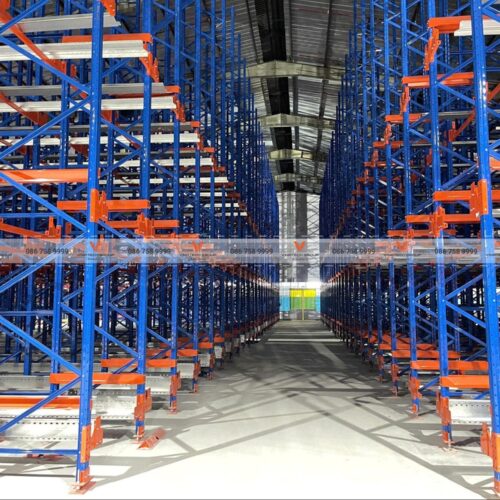
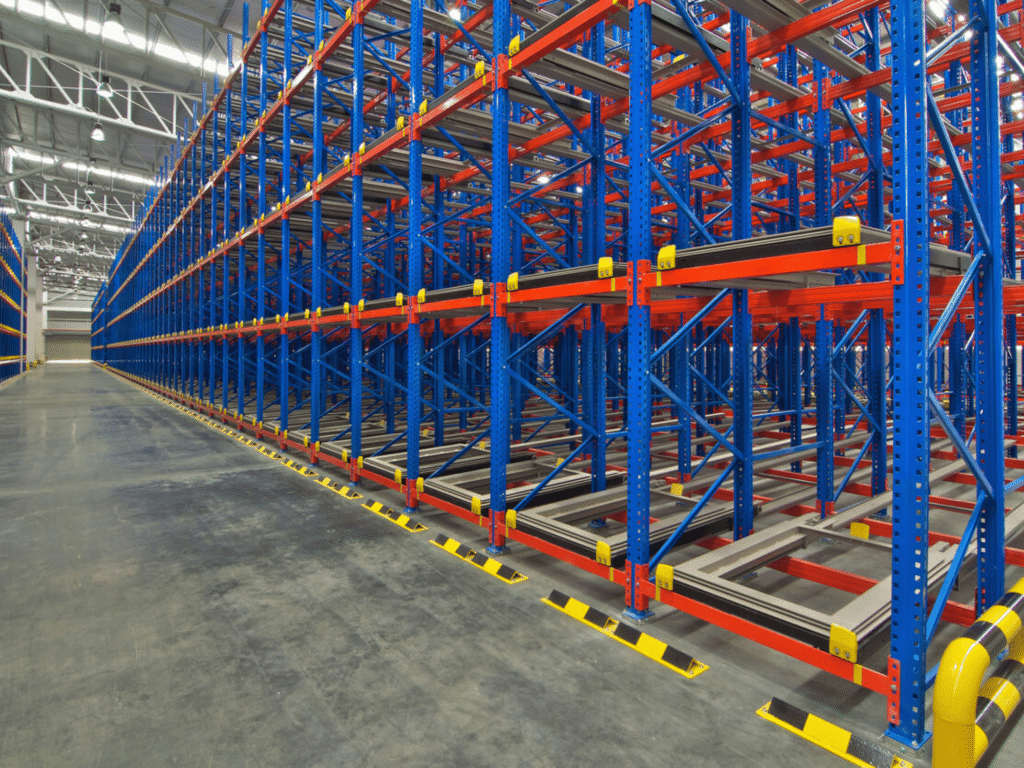
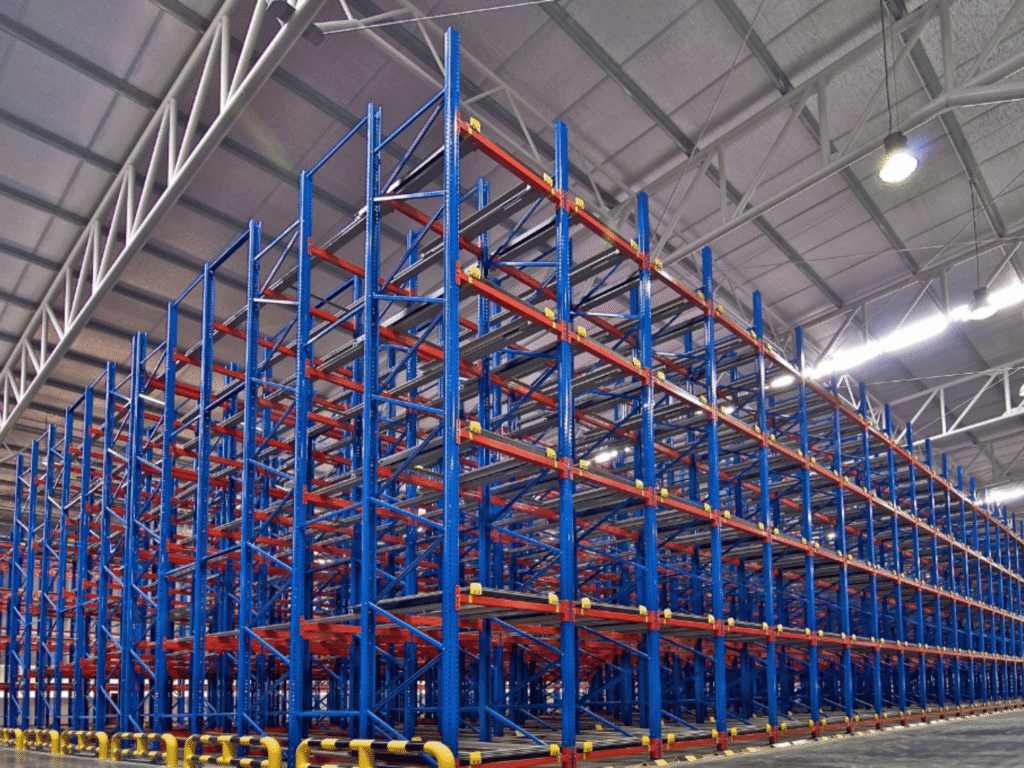
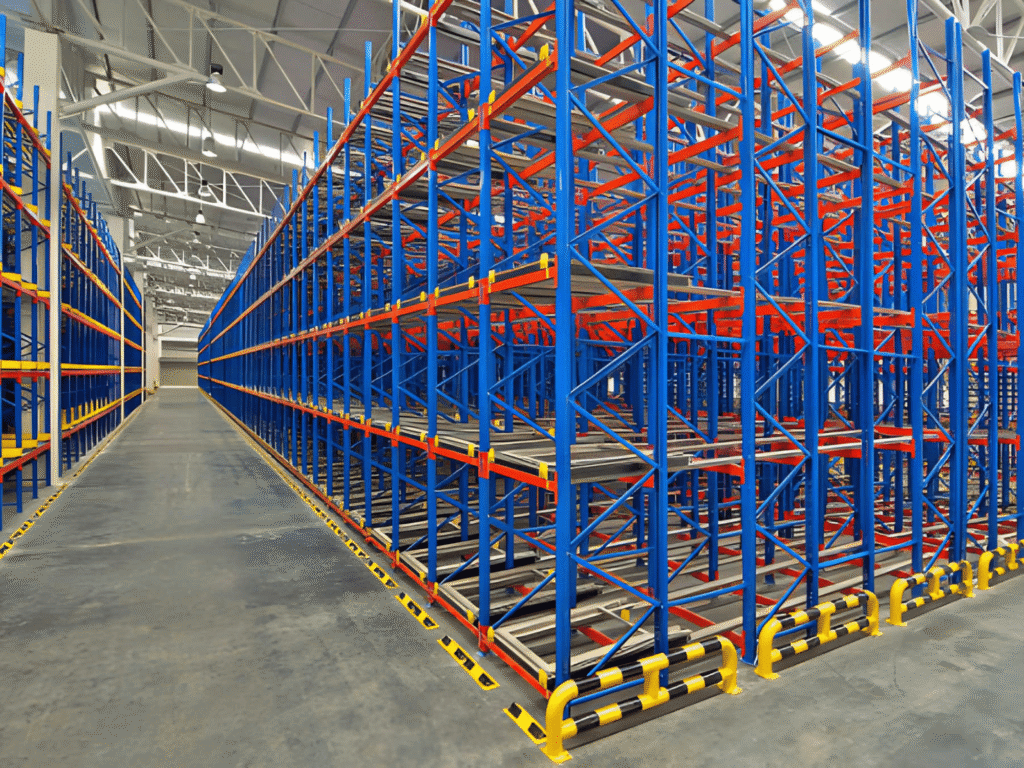
Push Back Racking is an industrial pallet storage system designed with depths of 2 to 5 pallets per lane. Pallets automatically slide forward when retrieving goods thanks to inclined rails and cart mechanisms. It operates on the LIFO (Last In – First Out) principle: the last pallet loaded is the first to be retrieved.
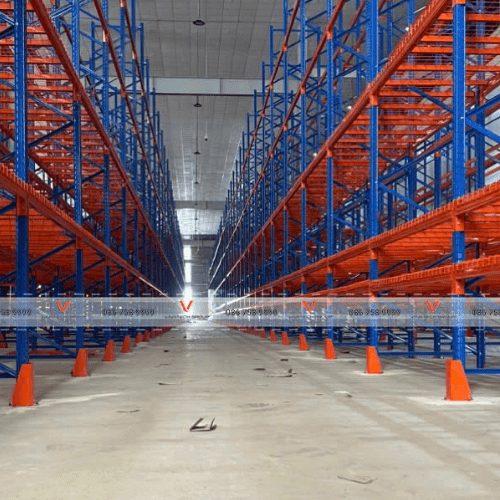
Compared to traditional Selective Racking, Push Back Racking increases storage density by up to 2–3 times while still ensuring fast, safe, and easy loading/unloading. This system is particularly suitable for FMCG, logistics warehouses, or high-turnover goods that do not require strict FIFO.
Structure of Push Back Racking
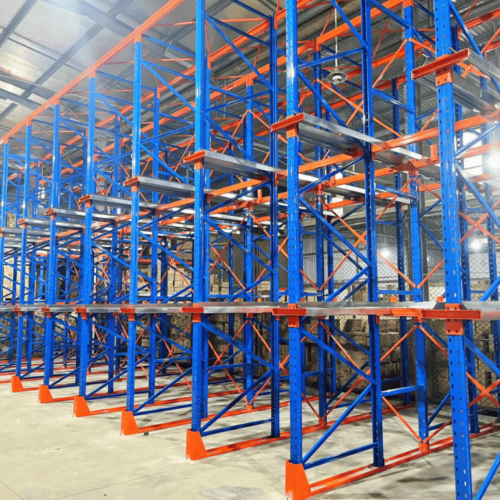
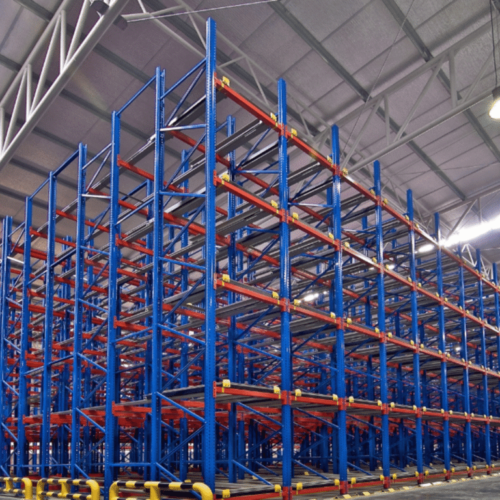
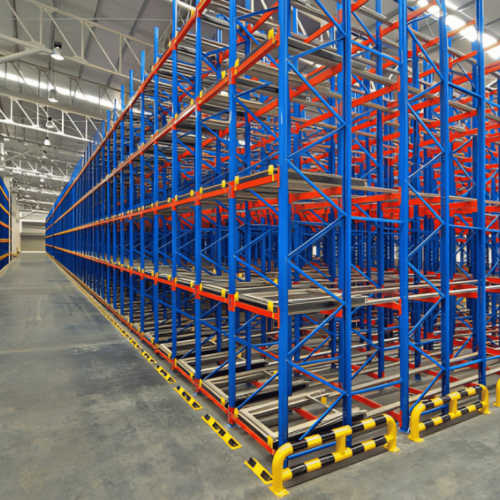
Push Back Racking is a perfect solution for warehouses needing high storage density, fast throughput, and flexible operation. The heavy-duty Push Back system (push-back rack) has the following basic structure:
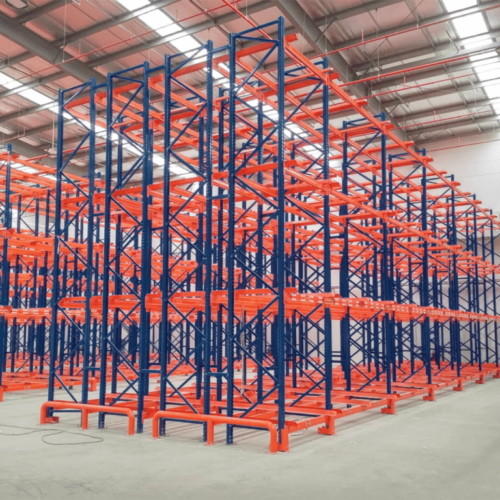
- Load-bearing upright frames: Primary structural support for the entire system, typically made from cold-rolled steel, with electrostatic powder coating or galvanization for rust resistance.
- Beams: Connect upright frames and serve as the base for rails and pallets. Beams directly bear the load from goods and evenly distribute weight.
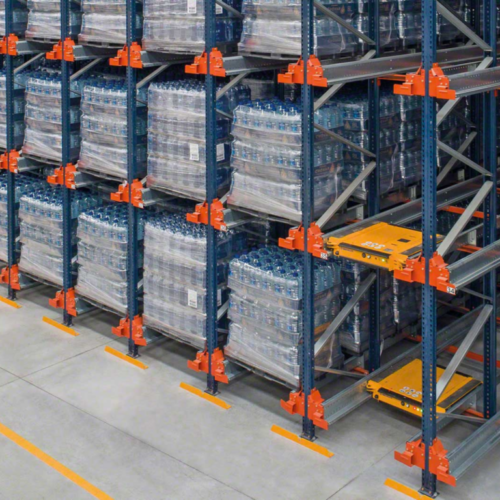
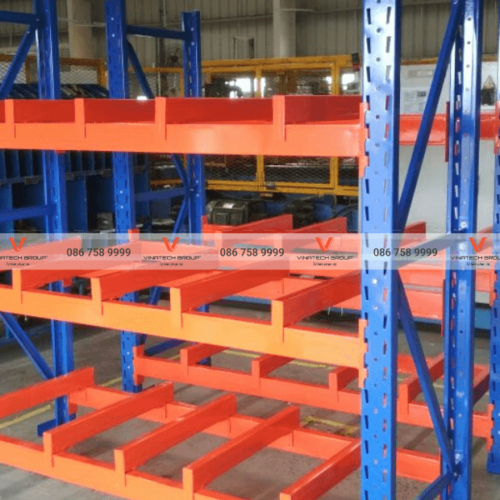
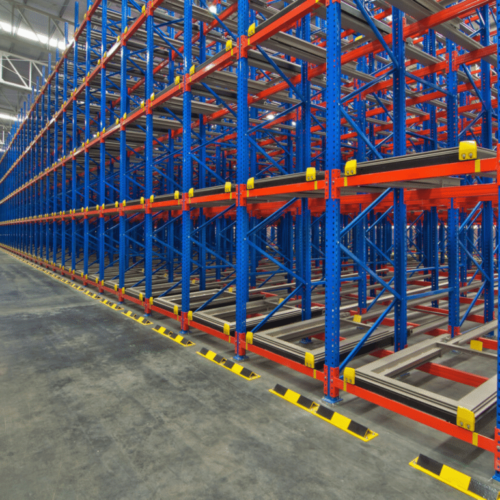
- Carts (sliding carts): Consist of a wheeled system (usually 4 wheels) that rolls on rails, with a pallet-supporting platform on top. Operation: When a new pallet is placed, the cart pushes previous carts deeper into the lane.
- Inclined rails: Provide the sliding surface for carts, allowing pallets to roll forward by gravity. Rails are typically inclined at 2–4 degrees for smooth, controlled movement.
- Pallet stoppers: Located at the end of each rail/lane to prevent the last cart and pallet from sliding out, ensuring safety. Usually a fixed horizontal box-section steel bar attached to the frame or rail.
- Shock absorption/damping system: Installed at the front of the rails to reduce impact when pallets slide forward too quickly. Options include industrial rubber buffers or mechanical dampers depending on investment level.
- Column protectors: Reinforce upright bases and protect against forklift impacts, increasing overall system stability.
Key Advantages of Push Back Racking
- Increases storage density by 50% to 100%: Allows 2 to 6 pallets deep per lane, significantly reducing forklift aisles and maximizing warehouse space.
- Saves time and operating costs: No need for forklifts to enter deep into racks → fewer collisions and faster operations. Pallets automatically slide forward → accelerates loading/unloading.
- No strict pallet uniformity required: Unlike Drive-In, Push Back does not demand identical pallet sizes, as each pallet rests on its own cart or roller rail.
- High safety and durability: Robust steel construction with electrostatic powder coating or galvanization; load capacity 500–1500 kg per pallet. Includes safety locks, column guards, and anti-fall barriers. System lifespan up to 15–20 years with proper operation.
- Easy expansion and modular design: Bolted modular system allows easy addition of lanes, reconfiguration of levels or depths, giving businesses flexibility for future growth.
Disadvantages of Industrial Push Back Racking
Despite its superior density advantages, Push Back Racking is not ideal for every warehouse:
- Not suitable for FIFO systems: Operates strictly on LIFO, unsuitable for industries requiring strict shelf-life management such as pharmaceuticals, short-shelf-life foods, or cold storage needing FIFO.
- Higher initial investment cost: Due to inclined rails, carts, heavy-duty bearings, Push Back costs 20–30% more than standard Selective Racking. However, it reduces long-term rental and operating costs through higher density.
- Limited access to deep pallets: To retrieve the innermost pallet, all outer pallets must be removed first – challenging if errors occur or mid-batch retrieval is needed. Not suitable for random access or non-sequential outbound.
- Requires experienced installation team: Precise alignment and calibration are critical to prevent rail bending, misalignment, or incorrect beam heights.
Vinatech Group – Trusted Push Back Racking Installer
With over 14 years in manufacturing, distributing, and installing warehouse racking, Vinatech Group proudly stands as one of Vietnam’s leading reputable brands.
- 100% in-house production: Full control from design to fabrication – strict quality, timeline, and cost management.
- Over 3,000 successful warehouse projects nationwide: Highly skilled technical team with proven experience in Push Back systems for FMCG, food, cold storage, logistics, electronics, etc.
- Tailored optimization consulting: On-site measurement, custom design, load simulation, and operational optimization for every project.
- Clear warranty & long-term after-sales: Up to 5–10 years warranty (project-dependent), with periodic inspections, fast spare parts replacement.
- Nationwide support – direct installation: Completion in 5–50 days from contract signing. In-house transportation team ensures consistent quality.
Please contact Vinatech via hotline: 086.758.9999 for the most accurate pricing.
The above is detailed information about Push Back Racking provided by Vinatech Group. We hope this helps you select the most suitable product for your needs.
Frequently Asked Questions
1. What is the maximum load capacity per pallet for Push Back Racking?
Vinatech Push Back Racking supports up to 2000 kg per pallet (custom heavy-duty designs available), with high safety factors.
2. What is the maximum height of the Push Back Racking system?
Up to 9 m (depending on warehouse structure and forklift), effectively utilizing full building height.
3. Does Push Back Racking operate on FIFO or LIFO?
Operates on LIFO (Last-In-First-Out) – last pallet in is first out, thanks to the automatic push-back mechanism. Not suitable for strict FIFO requirements.
4. What materials and surface treatment are used for Push Back Racking?
Premium cold-rolled steel frames with Omega uprights; electrostatic powder coating for rust and oxidation resistance (standard blue-orange colors); suitable for cold or humid environments.
5. Which forklift is best suited for Push Back Racking?
Standard diesel/electric forklifts with long forks; no specialized reach truck required (unlike Double Deep), but guide rails recommended for safe access.
6. Can Push Back Racking be easily expanded or relocated?
Yes, bolted modular design allows easy addition of lanes, reconfiguration, or relocation as your warehouse scales.
Contact Vinatech Group today for a free consultation, site survey, detailed 3D design, and the most competitive 2026 pricing!
Hotline: 086.758.9999 | Email: info@vinatechgroup.vn
Website: vinatechgroup.vn
We commit to custom manufacturing, export-quality standards, and professional nationwide installation.